 Mock Interview Copilot
Interview questions by role
Scholarship interview questions
Scholarship interviews ask three things: what you have done with the opportunities you have had, what you will do with this one, and whether you match what the funder cares about, whether that is academic merit, leadership, community service, a particular subject or financial need. Expect to be asked to tell the panel about yourself, why you should be chosen, your goals and how the award would help, a challenge you have overcome, how you contribute to your community or school, a time you led something, why you chose your subject, and how you would give back.
The strongest candidates answer with specific examples and a clear plan, not general statements about being hardworking and passionate.
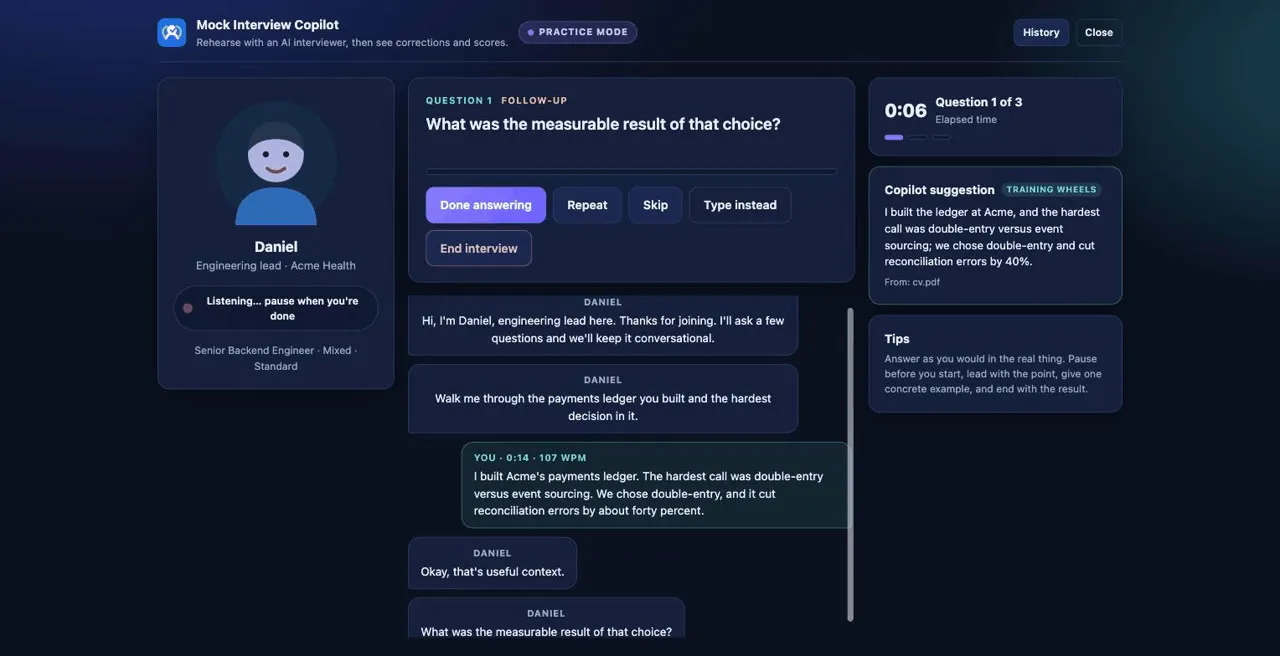
How the interview usually runs
Panels can include teachers or academics, trustees of the fund, staff from a sponsoring company, community members and past recipients. Interviews are usually one-to-one or with a small panel, and some schemes add a group discussion, a short presentation or questions about a current issue. The panel will usually have your application in front of them and may ask about anything in your essay or personal statement.
Before the interview, read the funder's stated purpose and criteria closely and map each one to an example of your own. A scholarship for community leadership wants different stories from one for academic excellence in a subject or one for students facing financial hardship. If the award is need-based, you may be asked about your circumstances. Answer factually and calmly; you can choose how much personal detail to share, and the panel mainly wants to understand what the award would make possible for you.
Common questions and what the interviewer is checking
Tell us about yourself.
What they are checking: A short introduction that connects your background, your interests and what you want to study or do, rather than a list of grades.
Why should we choose you for this scholarship?
What they are checking: Evidence matched to the award's criteria, such as results, service or leadership, plus a clear plan, not simply that you need it most.
What are your goals, and how will this scholarship help you reach them?
What they are checking: A specific plan and what the award would unlock, such as fewer paid hours, a field course, equipment, a placement or study abroad.
Tell us about a challenge you have overcome.
What they are checking: Resilience shown through what you did, who you asked for help and what you learned, without the story turning into only hardship.
How have you contributed to your school or community?
What they are checking: Sustained involvement with a real effect on other people, and why you did it.
Tell us about a time you showed leadership.
What they are checking: Leading by organising, encouraging or taking responsibility, whether or not you had a title.
Why did you choose this subject or course?
What they are checking: Genuine interest shown through something you did, read or made, and an idea of where it leads.
What is an issue in your field or community that matters to you?
What they are checking: That you follow what is happening, can explain it simply and have a view of your own.
If you were awarded this scholarship, how would you give back?
What they are checking: A credible, specific commitment that builds on what you already do, not a vague promise.
How would this funding change your situation? (need-based awards)
What they are checking: An honest, factual answer focused on what the funding would let you do, such as stay on your course or focus on study.
How to structure a strong answer
Use STAR for questions about challenges, leadership and community, and end each story with what it says about you and the award. For “why you” and goals questions, give two or three pieces of evidence that match the funder's criteria, then a concrete plan for what the scholarship would make possible.
- Point: the quality or criterion you are showing.
- Evidence: a specific example with what you did and what changed.
- Plan: what you will do next and how the award helps.
- Link: why that fits what this funder wants to support.
Example answer
Why should we choose you for this scholarship?
I think I fit what this award is for in two ways: I have shown I can keep my grades up while doing a lot for other people, and I have a clear plan for what I would do with the support.
For the last eighteen months I have run a homework club at our local library two evenings a week. It started with four younger students from my estate and now has around fifteen regulars, and two other sixth formers help me run it. At the same time I work twelve hours a week at a supermarket, and I am predicted the grades I need for environmental science.
The scholarship would let me cut my shifts in my first year so I can take the optional field course, which I could not otherwise afford, and keep volunteering. Longer term I want to work on flood risk in communities like mine. So the award would not just help me; I would keep putting it back into the place I come from.
Mistakes to avoid
- Generic answers such as “I am hardworking and passionate” with no example behind them.
- Focusing only on need without showing what you have done and what you plan to do.
- Not knowing what the funder supports or why the scholarship exists.
- Reciting your application essay word for word instead of adding to it.
- Telling a hardship story without saying what you did about it.
- Promising to give back in vague terms you cannot explain.
Frequently asked questions
What questions are asked in a scholarship interview?
Common questions are tell us about yourself, why you should be chosen, your goals, how the award would help, a challenge you overcame, your community involvement, leadership, why your subject, an issue you care about and how you would give back.
How do I answer “Why do you deserve this scholarship?”
Pick two or three pieces of evidence that match the funder's criteria, such as results, service or leadership, give a specific example of each, then explain what the award would let you do and why that fits the scholarship's purpose.
How should I talk about financial need?
Be honest and factual, share only what you are comfortable with, and focus on what the funding would make possible, such as staying on your course, working fewer hours or taking an opportunity you could not otherwise afford.
What should I ask at the end of a scholarship interview?
Ask what past recipients have gone on to do, whether there is mentoring or a network of scholars, and what the funder hopes recipients will contribute. Avoid asking only about the amount.