 Mock Interview Copilot
Interview questions by role
Account manager interview questions
Account manager interviews test whether you can keep clients, grow them and handle them when things go wrong. Expect questions about how you build relationships, how you manage a renewal, how you spot and pitch an upsell without damaging trust, a client you nearly lost, how you deal with an angry client, and how you organise a portfolio of accounts.
Unlike a new-business sales interview, the focus is on long-term value: retention, satisfaction and growth from customers you already have.
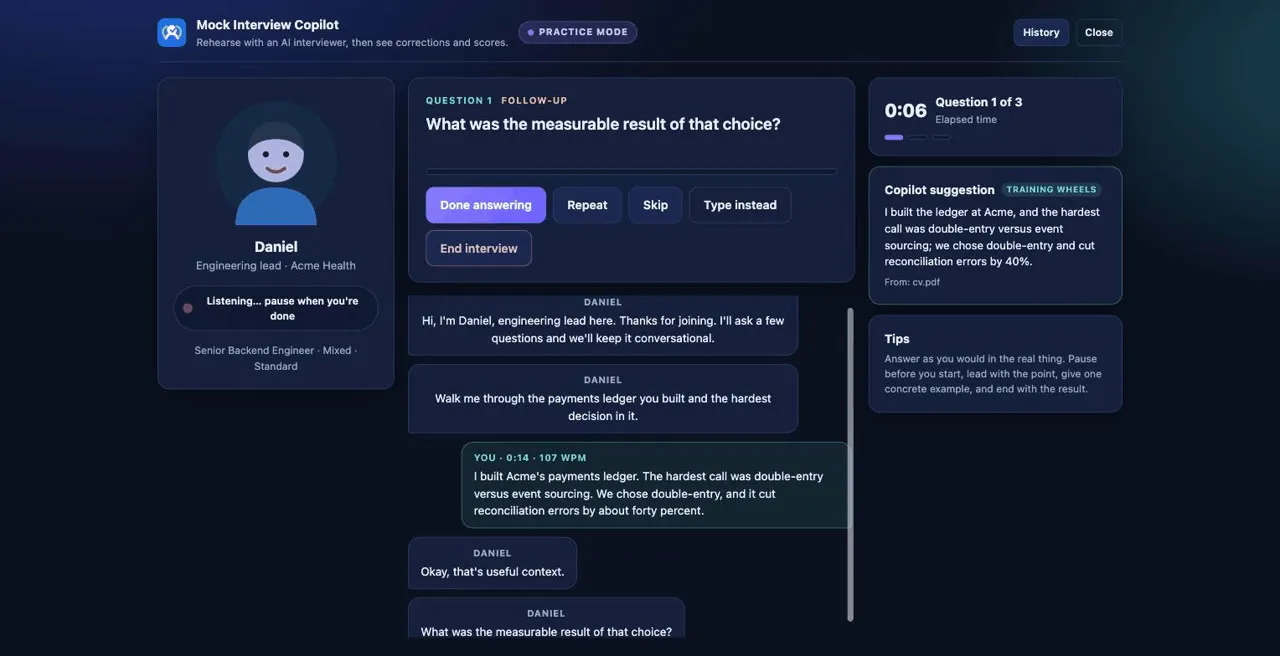
How the interview usually runs
A typical process is a recruiter or HR screen, an interview with the head of account management, client services or sales, and often a role play or case: a client threatening not to renew, an account plan for a sample customer, or a presentation on how you would grow an account. In agencies you may meet the creative or delivery leads you would work with; in software companies, the customer success team.
The main difference from a sales representative interview is the timescale. Sales roles are judged on winning new business; account managers are judged on what happens afterwards: whether clients stay, renew and spend more, and whether they would recommend you. Interviewers listen for curiosity about the client's business, honesty when delivery goes wrong, comfort with commercial conversations, and the organisation to keep many accounts moving at once. Be ready with numbers you can explain, such as the size of your book or renewals you handled, and never round them up.
Common questions and what the interviewer is checking
How do you build a relationship with a client you have inherited?
What they are checking: A plan: learning the history, meeting the key people, understanding their goals and how they measure success, and delivering an early quick win.
Walk me through how you manage a renewal.
What they are checking: That you start early, review the value delivered against the client's goals, identify risks and decision makers, and do not leave the conversation to the final month.
Tell me about a client you nearly lost. What happened?
What they are checking: Ownership and recovery: spotting the warning signs, being honest about what went wrong, the plan you put in place, and the outcome.
How do you identify upsell or cross-sell opportunities?
What they are checking: That growth comes from understanding the client's needs and results, not from pushing products, and that you know when not to sell.
A client is angry about a missed deadline and wants a discount. What do you do?
What they are checking: Calm, accountable handling: acknowledging the problem, getting the facts, fixing what you can with your team, and treating any concession as a negotiation rather than a reflex.
How do you prioritise across a large portfolio of accounts?
What they are checking: Organisation: grouping accounts by value and risk, regular check-ins, using a CRM, and spending time where it protects or grows the most.
How do you work with internal teams to deliver for a client?
What they are checking: Influence without authority: clear briefs, managing expectations on both sides, and advocating for the client while being fair to colleagues.
How would you tell a client something they do not want to hear?
What they are checking: Honesty with tact: preparing, delivering the message early and directly, explaining why, and offering options.
Which measures would you use to judge your own performance?
What they are checking: Commercial awareness: retention or renewals, growth in account value, client satisfaction, and how you would track them.
What do you see as the difference between account management and sales?
What they are checking: That you understand the purpose of the role: long-term value and trust, alongside commercial targets.
How to structure a strong answer
Use STAR, but start with the client's goal or problem, not your product. Interviewers want to hear the commercial outcome (renewed, grew, recovered) and the relationship outcome (trust, satisfaction) together. In role plays, listen and ask questions before proposing anything.
- Client context: who they were, what they needed and what was at risk.
- Diagnosis: what you learned from the client and from your own data.
- Action: what you did, who you involved and how you communicated.
- Result: renewal, growth or recovery, and what changed in the relationship.
Example answer
Tell me about a client you nearly lost.
I managed about thirty accounts at a marketing software company. One of our larger clients emailed three months before renewal to say they were reviewing alternatives. Their usage had dropped after their main contact left, and nobody on our side had noticed.
I asked for a call with the new head of marketing and went in to listen rather than defend. Her team didn't know half of what the product could do, and they were building their reports by hand. I set up two training sessions with our support team, built a dashboard that matched what their board wanted to see, and booked monthly check-ins until renewal. I was also honest that we should have spotted the drop sooner.
They renewed for another year and, six months later, added a second team. I changed how I worked across my whole book: I now watch for drops in usage and make sure I have at least two contacts at every client, so one person leaving doesn't put the account at risk.
Mistakes to avoid
- Answering like a new-business seller, focusing on closing deals rather than keeping and growing clients.
- Describing upselling as pushing more products, with no link to the client's results.
- Blaming the delivery team or the product when a client was unhappy, instead of owning the relationship.
- Giving away a discount in the role play the moment the client complains.
- Claiming retention or growth figures you cannot explain when asked how they were measured.
Frequently asked questions
What questions are asked in an account manager interview?
Expect questions on building relationships with new clients, managing renewals, a client you nearly lost, finding upsell opportunities, handling an angry client, prioritising a portfolio, working with internal teams, delivering bad news and how you measure your performance.
What is the difference between an account manager and a sales representative?
A sales representative mainly wins new customers. An account manager looks after existing ones: keeping them happy, renewing contracts and growing what they buy. Account management interviews focus more on retention and relationships.
How do I answer “how would you handle a difficult client” in an account manager interview?
Show that you listen first, get the facts, own the problem, fix what you can with your team and keep the client informed. Give a real example with the outcome, such as a renewal you saved.
How do I prepare for an account manager role play?
Expect a client who is unhappy or thinking of leaving. Ask questions before offering anything, acknowledge the problem, agree next steps, and avoid offering a discount before you understand what is really wrong.