 Mock Interview Copilot
Interview questions by type
How to answer “What are your salary expectations?”
The safest way to answer “What are your salary expectations?” is to research what the role pays in your area, then give a range rather than a single number, with the bottom of the range at a figure you would genuinely accept. Say it plainly, add that you are open to discussing the whole package, and move on. If it is very early and you know little about the role, you can politely ask for their budgeted range first, but be ready to give yours if they ask again.
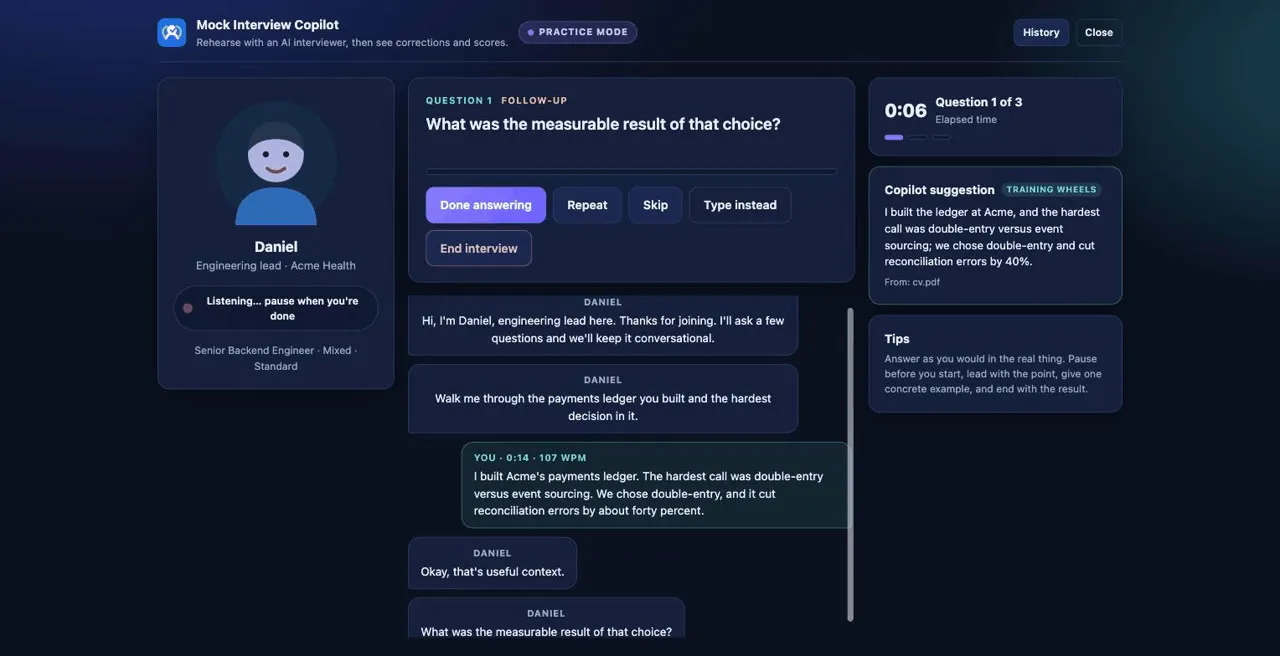
How the interview usually runs
Employers have a budget and want to know early whether you are within it. Recruiters often ask in the first screening call, and many online application forms include a “desired salary” or “expected salary” field. The risk runs both ways: aim far too high and you may be screened out; aim too low and you may pull the offer below what they were prepared to pay.
Research is what makes the answer easy. Look at the advertised range if there is one (many UK public sector jobs, including NHS and civil service roles, publish the pay band or salary in the advert), similar adverts for the same title and level in your area, salary pages on job sites, and what people who do the job say.
Salary expectations are different from salary history. In some places, including several US states and cities, employers are not allowed to ask what you currently earn. Either way, you can talk about what you are looking for rather than what you earn today.
Versions of the question and what each one is after
What are your salary expectations?
What they are checking: Whether you are inside their budget, and whether you have researched the market or are guessing.
What are you earning at the moment?
What they are checking: A benchmark for the offer. You can answer with what you are looking for instead, and in some places they are not allowed to ask.
Our budget for this role is [their range]. Does that work for you?
What they are checking: A quick yes or no. If it works, say so; if it is below what you need, say so politely now rather than after three rounds.
What is the lowest you would accept?
What they are checking: Your walk-away point. You do not have to reveal it; restate your range and say you would look at the whole package.
Expected salary (a field on the application form)
What they are checking: Often a filter. Figures well outside the range may be screened out, so stay close to the advertised range or your research.
What salary are you looking for?
What they are checking: A range you can say without hesitating; an apologetic tone invites a lower offer.
Are you flexible on salary?
What they are checking: Whether there is room to negotiate. Say what you are flexible on, such as start date, benefits or a pay review after a set period, rather than a bare yes.
Why do you think you are worth that?
What they are checking: That your range is grounded in research and in what you bring, not in what you need to cover your bills.
How to answer: research, range, reason, flexibility
Prepare before the first call. Write down three figures: the market range for this role in your area, the figure you would be pleased with, and the lowest you would accept. Your spoken range should start a little above the lowest and include the one you would be pleased with.
Alternatives for different situations:
If the advert shows a range: “The advertised range works for me. Given my experience with [skill], I'd hope to be towards the upper part of it, but I'm happy to discuss it alongside the full package.”
If it is the first call and you know little about the role: “I'd like to understand the role better before naming a figure. Could you share the range you've budgeted?” If they press, give your range.
On a form with a required number field: enter the figure you would be content with, inside the range you found for this role in your area, and use any free-text box to add “negotiable depending on the full package”.
- Research: the advertised range, similar adverts in your area, and what people at your level actually earn.
- Give a range, not a single figure, with the bottom at a number you would genuinely accept.
- Add a short reason: your research and what you bring to this role.
- Signal flexibility: you are looking at the whole package and want it to work for both sides.
Example answer
What are your salary expectations? (Early in a recruiter screening call, no range in the advert.)
I've looked at similar roles in the area and at what's being advertised at this level, so I'm looking for something within the range I found, roughly [lower figure] to [upper figure]. That reflects the three years I've spent running payroll on my own, and the experience with your payroll system that the advert asks for.
I'm flexible within that depending on the full package, things like pension, hybrid working and the training budget, because those matter to me as well. Does that sit within what you've budgeted for the role?
Sample answers you can adapt
Mistakes to avoid
- Naming a figure with no research, so it is either far too low or far outside the budget.
- Giving a range so wide it is meaningless, or with a bottom figure you would not actually accept, because offers often land near the bottom.
- Basing the number on your personal costs rather than the market and your experience.
- Refusing to answer at all. Deflecting once is reasonable; dodging repeatedly makes you look difficult.
- Inventing a competing offer or inflating your current pay to push the number up.
- Forgetting the rest of the package, then accepting a salary that looks fine but comes with a weaker pension, fewer days off or unpaid overtime.
Frequently asked questions
Should I give a salary range or a single number?
A range usually works better because it leaves room to negotiate. Make sure the lowest number in it is one you would genuinely accept, because offers often land near the bottom.
What should I put in the expected salary field on an application form?
If the advert gives a range, use a figure within it. If not, use the range you found for this role in your area. If the field accepts text, a range or “negotiable” is fine; if it only takes a number, enter a figure you would be content with.
Is it OK to ask for their range first?
Yes, especially in an early call. If they decline and ask again, give your researched range rather than refusing.
Do I have to tell them my current salary?
In some places, including several US states, employers are not allowed to ask about salary history. Elsewhere you can still choose to answer with the range you are looking for rather than your current pay.