 Mock Interview Copilot
Interview questions by role
NHS Band 7 interview questions
NHS band 7 interviews are for roles that lead a service or practise at an advanced level: ward and department managers, team managers in community and mental health services, clinical specialists, and some advanced or trainee advanced practitioner posts. Panels test whether you can run a team and a service, not just a shift: your leadership style, staffing and rostering, managing performance and sickness, clinical governance and incidents, service improvement, and using resources responsibly. Many band 7 interviews include a presentation. Expect every answer to be probed for evidence of something you actually led.
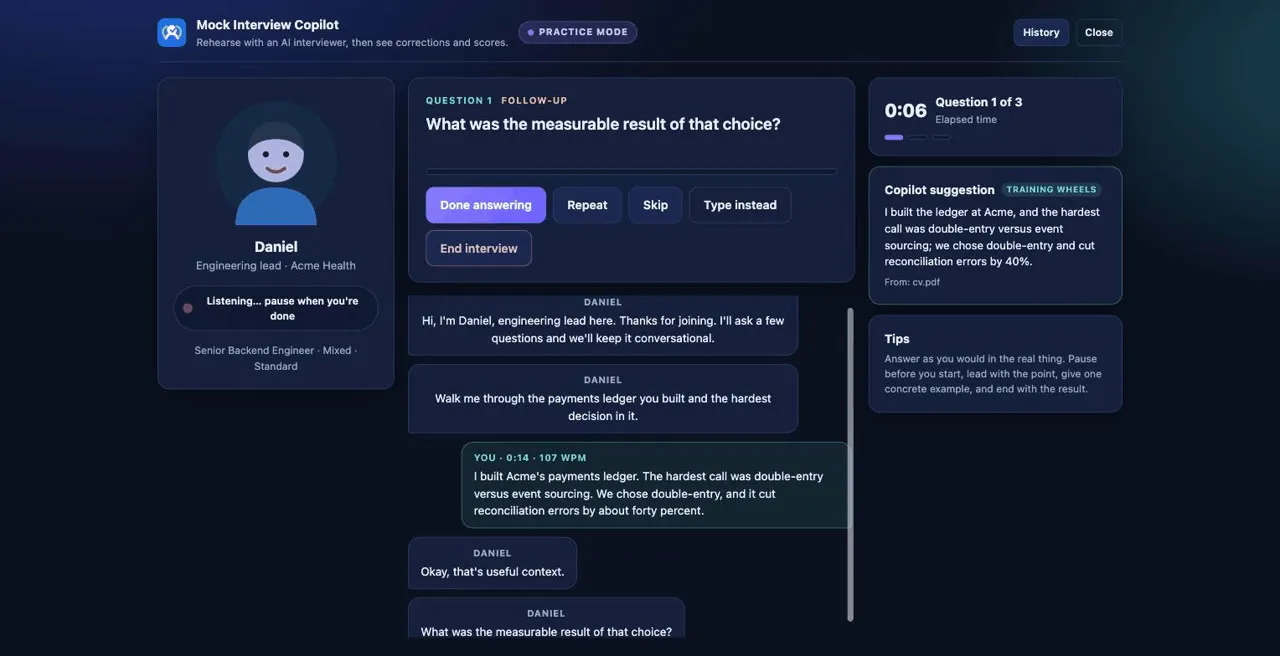
How the interview usually runs
A band 7 panel is often larger than at lower bands: a matron or head of service, a senior nurse or professional lead, someone from HR, and sometimes a medical lead or a patient representative. Many trusts set a presentation or written exercise, sometimes with the topic in advance and sometimes on the day; typical themes include improving patient experience, retaining staff, safety on the unit, or your priorities for your first months in post.
The person specification often asks for experience at band 6, evidence of leadership development, experience of managing staff and of improvement work. Advanced practice posts add advanced clinical assessment and decision-making, and sometimes a master's-level qualification or a commitment to complete one. Budget questions are usually general: what drives costs such as temporary staffing and supplies, how you would control them safely, and how you work with finance colleagues, rather than detailed accounting.
Read the trust's values, strategy and anything published about the service, such as inspection reports, so your answers fit its priorities.
Common questions and what the interviewer is checking
What is your leadership style? Give an example of it working.
What they are checking: Self-awareness and flexibility, backed by a real example of leading a team through change or pressure, not a list of adjectives.
How would you manage staffing and rostering on this unit?
What they are checking: Fair, safe rostering against acuity and skill mix, managing leave and sickness, using temporary staff carefully, and escalating gaps through the right route.
How would you manage a member of staff with frequent sickness absence?
What they are checking: Following the trust's attendance policy consistently, supportive conversations, occupational health referral, reasonable adjustments, and fairness across the team.
Tell me about a service improvement you led from start to finish.
What they are checking: That you identified a problem with data, involved staff and patients, tested a change, measured the result and made it stick.
How would you respond to a serious incident on your unit?
What they are checking: Immediate safety, support for the patient, family and staff, reporting, duty of candour, contributing to the investigation, and sharing the learning.
How would you handle a budget pressure, such as rising agency spend?
What they are checking: Understanding what drives the cost, working with finance and HR, improving recruitment and retention, and protecting safety while cutting waste.
What does clinical governance mean to you as a manager?
What they are checking: A practical grasp of audit, incident and risk management, complaints, training and policies, and how you use that information to improve care.
How would you build a positive culture in a team with low morale?
What they are checking: Listening first, visible leadership, recognising good work, tackling poor behaviour, involving staff in decisions and supporting their wellbeing.
What would you focus on in your first three months?
What they are checking: Listening and learning before changing things, understanding the safety and staffing data, building relationships, and a few clear early priorities.
How to structure a strong answer
Band 7 answers need evidence of leadership at service level. Use STAR, but expand the Action to show how you diagnosed the problem, brought people with you and handled resistance, and make the Result measurable where you can. For the presentation, keep to time, use the trust's own priorities, offer a small number of realistic actions, and prepare for questions on cost, staff buy-in and how you would measure success.
- Problem: what was wrong and how you knew, ideally from data or feedback.
- People: who you involved, including staff, patients and other services.
- Change: what you did, step by step, and how you dealt with pushback.
- Measure and sustain: what changed, how you checked it, and how you kept it going.
Example answer
Tell me about a service improvement you have led.
As deputy sister on a surgical ward, I noticed from patient feedback and our own records that discharges were often delayed until late afternoon, mainly because take-home medicines and transport were sorted out on the day. Patients waiting in recovery could not get a bed, and families were frustrated.
I took it to my ward manager and got agreement to test a change. I met the pharmacy team, the discharge coordinator and two of the consultants, and we agreed that patients likely to go home the next day would be identified on the afternoon ward round, with their medicines prescribed that evening. I ran a two-week test on one bay, collected discharge times on a simple sheet, and held short huddles to hear what was not working. Some staff were worried about extra evening work, so we changed who prepared the paperwork.
After six weeks across the ward, most planned discharges were leaving before lunch instead of mid-afternoon, and our next audit showed fewer delays waiting for medicines. The process is now part of the ward's routine. I learned that involving the people who do the work early saves you fighting them later, and that small tests make it easier for a sceptical team to say yes.
Mistakes to avoid
- Describing yourself as a leader in general terms without one example you led from start to finish.
- Giving a presentation full of ideas with no costs, timeline or measures.
- Answering budget questions with “I would cut agency” and nothing about safety or why the spend is happening.
- Not knowing the trust's priorities or the challenges the service faces.
- Promising big changes in your first weeks before you have listened to the team.
Frequently asked questions
What questions are asked in a band 7 interview?
Expect leadership style, staffing and rostering, sickness and performance management, a service improvement you led, responding to a serious incident, clinical governance, budget pressures, building team culture, and your priorities for your first three months.
Is there always a presentation in a band 7 interview?
Not always, but many band 7 interviews include one. The topic and time allowed are usually given in the invite letter, sometimes in advance and sometimes on the day.
Do band 7 interviews ask about budgets?
Often, but usually in general terms: what drives costs such as temporary staffing and supplies, how you would control them safely, and how you would work with finance colleagues.
How do I prepare for a band 7 ward manager interview?
Read the trust's strategy and anything published about the service, prepare examples of leading change, managing people and handling incidents, and rehearse the presentation to time.
Related interview guides
This page is interview preparation, not professional or clinical guidance. Always follow your employer's policies and your regulator's standards.