 Mock Interview Copilot
Interview questions by role
Cashier interview questions
Cashier interviews test whether you can be trusted with money and stay accurate and friendly when the queue is long. Expect questions about handling cash and card payments, what you would do if your till did not balance, how you deal with a customer who wants a refund you cannot give, how you keep a queue moving, and what you would do if you suspected a fake note or a theft. Managers want honesty, care with details and a calm manner more than previous experience.
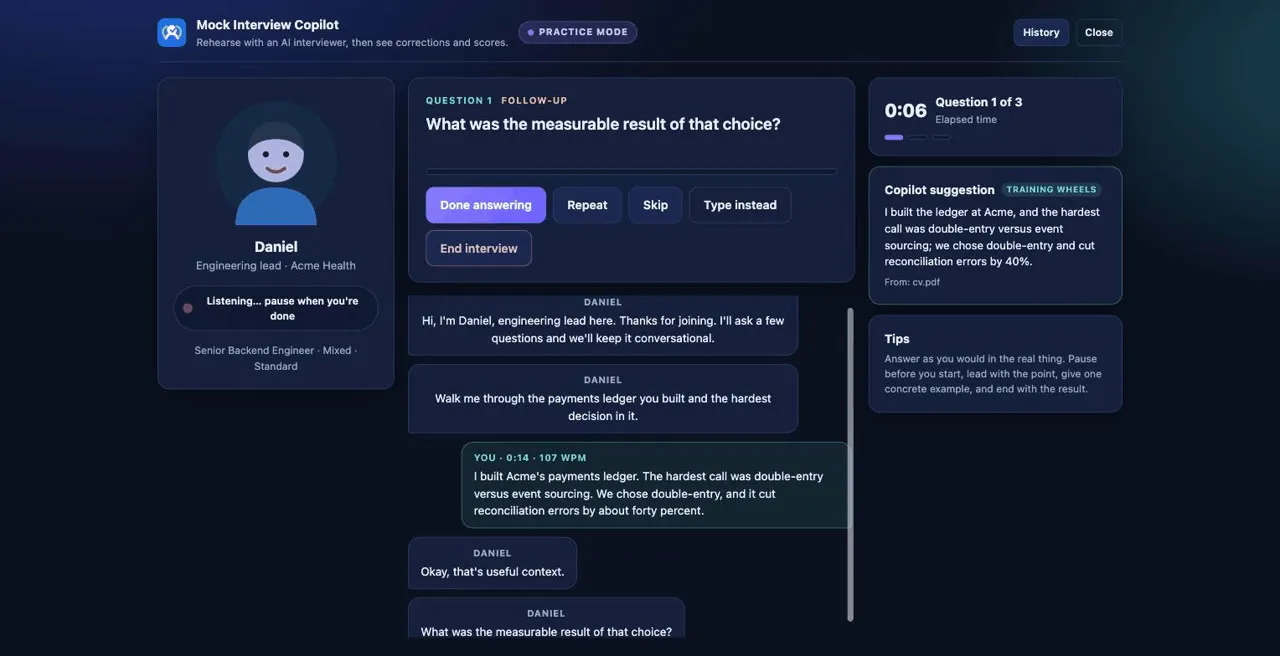
How the interview usually runs
Cashier jobs exist in supermarkets, shops, petrol or gas stations, cinemas, fast-food restaurants and anywhere else that takes payments; in the UK the role is often called checkout assistant or till operator. The interview is usually short, with a store or shift manager, and larger employers may add an online assessment with situational questions or a basic maths check, such as working out change.
Two themes run through most questions. The first is trust: you will handle cash, refunds, discounts and age-restricted sales, and the manager needs to know you will follow procedures when nobody is watching and own up to mistakes straight away. The second is pace with accuracy: a fast cashier who often gives the wrong change creates more problems than a steady one who gets it right. A good answer shows both, and shows you know when to call a supervisor rather than deciding something yourself.
Common questions and what the interviewer is checking
Have you handled cash before, and how do you make sure you give the right change?
What they are checking: A reliable habit: counting change back to the customer, keeping the note they handed you visible until the transaction is finished, and not rushing the count.
What would you do if your till was short at the end of your shift?
What they are checking: Honesty and procedure: recount, report it to the supervisor straight away, never cover it with your own money or adjust figures, and think about what might have caused it.
How would you keep a long queue moving without making mistakes?
What they are checking: Calm efficiency: greeting each customer, scanning in a steady rhythm, calling for another till to open, and not letting speed turn into errors.
A customer wants a refund but has no receipt. What do you do?
What they are checking: That you know there will be a store policy, explain it politely, offer what is allowed, and call a supervisor rather than refusing flatly or bending the rules.
What would you do if you thought a banknote might be fake?
What they are checking: That you follow the store's checking procedure, stay polite, do not accuse the customer, and call a supervisor to decide, without putting yourself at risk.
What would you do if you saw a colleague taking money or goods?
What they are checking: Integrity: reporting it to a manager through the proper route rather than confronting the person or ignoring it.
How would you handle an age-restricted sale when the customer has no ID?
What they are checking: That you follow the policy every time, refuse politely and firmly, and call a supervisor if the customer becomes difficult.
A customer is rude because the price on the shelf was different. How do you respond?
What they are checking: Calm problem-solving: listening, checking the price, following the price-check procedure and involving a supervisor if needed, without taking it personally.
Tell me about a time you were trusted with something important.
What they are checking: Evidence of reliability from any part of your life: keys, money, looking after a younger sibling, or a responsibility at school or work.
How to structure a strong answer
Cashier answers work best when they show a habit, not just a good intention. Say what you would do step by step, include the point where you involve a supervisor, and back it up with a short example if you have one. The interviewer is listening for honesty, accuracy and calm in the same answer.
- State what you would do first.
- Say how you would follow the procedure and who you would tell.
- Add a short example that shows the habit in action.
- Finish with why it matters for the customer or the business.
Example answer
What would you do if your till was short at the end of your shift?
First I would recount it carefully, including coins and any notes that might have stuck together, and check whether a refund or a voided sale had been missed. If it was still short, I would tell my supervisor straight away and be honest about it, even though it's uncomfortable. I wouldn't put my own money in or leave it for someone else to find.
In my last job at a cinema kiosk, my drawer was short one evening. When my supervisor and I went through the transactions, we worked out I had given change from a twenty when the customer had handed me a ten during a rush. After that, I started leaving the customer's note on top of the drawer until I had counted their change back to them, and my drawer balanced on every shift for the rest of the time I worked there. It taught me that a steady routine matters more than speed.
Mistakes to avoid
- Saying you would make up a shortage with your own money or quietly fix it. That hides problems and can look dishonest.
- Saying you would accuse a customer of passing a fake note, or confront someone you suspect of stealing.
- Claiming you never make mistakes with money instead of describing how you check your work.
- Talking only about speed with nothing about accuracy, or only about accuracy with nothing about the queue.
- Suggesting you would bend the rules on refunds or age-restricted sales for a regular or a friend.
Frequently asked questions
What questions are asked in a cashier interview?
Expect questions about handling cash and giving change, what you would do if your till was short, keeping a queue moving, refunds without a receipt, suspected fake notes or theft, age-restricted sales, rude customers and your availability.
How do I answer cashier interview questions with no experience?
Use examples that show you are honest, careful with details and calm with people, from school, volunteering, sport or helping in a family business. Say you are comfortable with basic maths and keen to learn the till system.
Is there a test in a cashier interview?
Some employers include a short online assessment or ask you to work out change or a simple total. Practise mental arithmetic with everyday amounts and take your time; accuracy matters more than speed.
What should I say if asked about a till shortage?
Say you would recount, check for missed refunds or voids, report it to your supervisor straight away and never cover it yourself. If you have a real example, explain what caused it and the habit you changed afterwards.