 Mock Interview Copilot
Interview questions by role
Assistant manager interview questions
Assistant manager interviews, in retail or restaurants, check whether you can run the business when the manager is not there and support the manager when they are. Expect questions on how you would take charge while the manager is away, how you open and close safely, what you do when the till does not balance, how you coach a struggling team member, how you handle conflict between staff, and how you deal with a complaint the team cannot resolve.
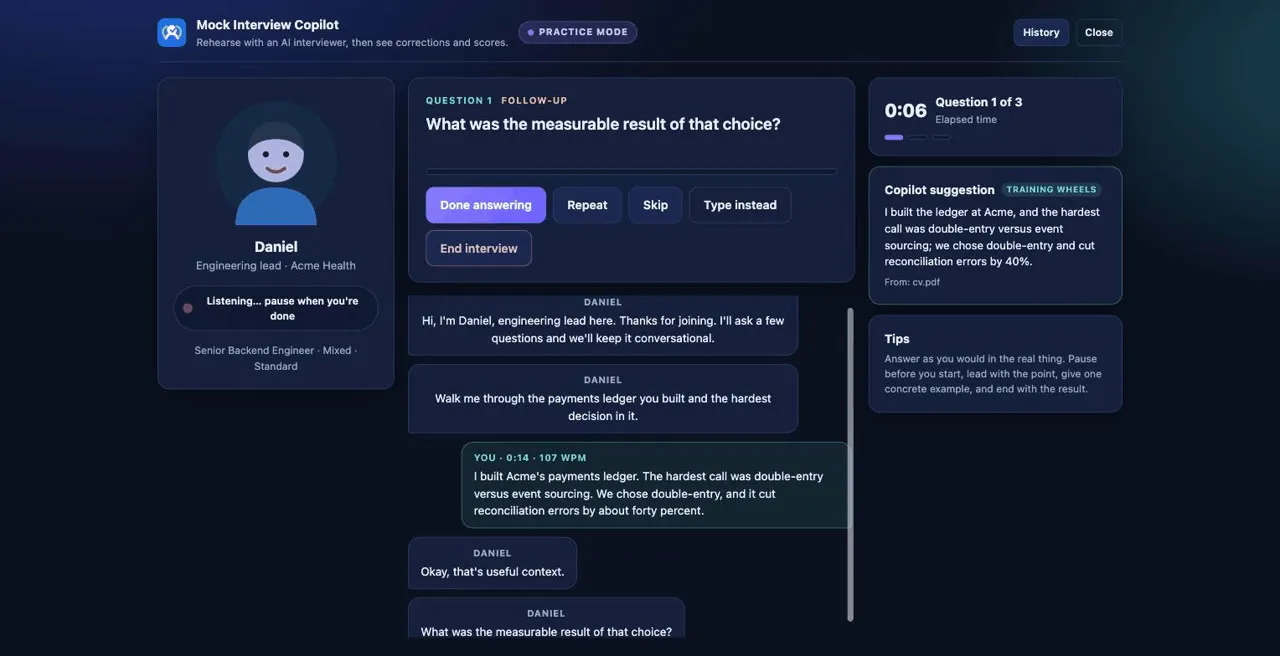
How the interview usually runs
Interviews are usually with the store or restaurant manager and sometimes the area or general manager, and may include a trial shift or a walk around the floor. Questions mix your past experience with scenarios from a normal day, such as a till that is short at close.
The role sits between supervisor and manager, so interviewers test both. They want someone who can lead from the floor, handle keys, cash and paperwork accurately, make a sensible call without phoning the manager about everything, and know which issues must be escalated. If you are applying from a supervisor or shift lead role, use examples of times you covered for your manager and what you decided on your own.
Common questions and what the interviewer is checking
Your manager is away for two weeks. How do you run the store or restaurant?
What they are checking: Ownership: a clear handover beforehand, keeping routines going, making day-to-day decisions, keeping a log of issues, and knowing what you would escalate to the area manager.
Walk me through how you open and close.
What they are checking: Attention to security and process: alarms and doors, cash and safe procedures, opening checks, end-of-day reconciliation, and following the lone-working policy.
At close, the till is short. What do you do?
What they are checking: That you recount calmly, check for obvious errors such as missed refunds, follow the cash discrepancy procedure, record it honestly, and do not accuse anyone or cover it from your own pocket.
Tell me about a time you coached someone to improve.
What they are checking: A specific person and skill, how you showed them rather than told them, how you checked progress and what changed as a result.
Two team members have fallen out and it is affecting the shift. How do you handle it?
What they are checking: Dealing with it early and privately, hearing both sides, keeping the focus on behaviour at work, agreeing how they will work together, and following up.
You disagree with a decision your manager has made. What do you do?
What they are checking: That you raise it privately with reasons, accept the final call, and back it in front of the team rather than undermining it.
A customer insists on speaking to the manager and you are in charge. How do you handle it?
What they are checking: Confidence to take the complaint yourself: listening, fixing what you can within policy, and recording it so the manager is informed.
How do you get tasks done on a shift when you are also serving customers?
What they are checking: Leading from the floor: a short brief at the start, clear jobs for each person, checking in during the shift, and stepping in where customers are waiting.
Why do you want to be an assistant manager, and where do you want to go next?
What they are checking: Ambition that fits the business, such as becoming a manager here, balanced with commitment to doing this role well first.
How to structure a strong answer
Use STAR for past examples and keep the focus on the decisions you made when you were in charge. For scenarios, say what you would do first to keep the shift running, then how you would deal with the person or the problem, and what you would tell your manager afterwards. Interviewers want to see that you act rather than wait for permission, while knowing your limits.
- Situation: the shift, who was in charge and what went wrong.
- Decision: what you chose to do and why, including anything you escalated.
- Action: how you handled the people involved and kept the shift going.
- Result and follow-up: the outcome, what you recorded and what you told your manager.
Example answer
Tell me about a time you had to deal with conflict in your team.
I was shift lead in a busy café, covering for the assistant manager on Saturdays. Two baristas had been snapping at each other for a couple of weeks about who cleaned the machines at close, and one Saturday it turned into an argument behind the counter while customers were waiting.
I asked one of them to take over the till and the other to restock in the back for ten minutes, so they were apart and the queue kept moving. After the rush I spoke to each of them separately. Both felt the other left the cleaning to them, and neither was entirely wrong: the closing checklist didn't say who did what. I agreed a rota for the closing jobs with both of them, added it to the checklist, and told my manager what had happened and what I had changed.
The arguments stopped, and for the next month the closing checks were completed every night, when before they had been missed about once a week.
Mistakes to avoid
- Answering every scenario with “I'd call the manager”. Interviewers want to see you can make a sensible decision yourself.
- Swinging the other way and describing decisions that were clearly above your authority, such as changing prices or disciplining someone without following the process.
- Saying your main strength is being friends with the team. Being fair and consistent matters more than being liked.
- Criticising a previous manager to show you would do better.
- Being vague about cash, keys and security procedures, which are a big part of why the role is trusted to you.
Frequently asked questions
What questions are asked in an assistant manager interview?
Expect running the store or restaurant while the manager is away, opening and closing, a cash discrepancy, coaching a team member, conflict between staff, disagreeing with your manager, handling escalated complaints, and why you want to move into management.
How do I answer assistant manager questions with no management experience?
Use times you ran a shift, covered for a supervisor, trained new starters or handled a complaint on your own. Say what you decided and what happened, and show you know which issues you would escalate.
What is the difference between an assistant manager and a supervisor?
A supervisor usually runs shifts and tasks. An assistant manager also shares responsibility for the business, such as cash, rotas, stock, recruitment and performance, and deputises for the manager, so the interview asks more about decisions and people.
How should I answer “why do you want to be an assistant manager”?
Link your answer to the experience you already have, what you enjoy about leading a team, and this business in particular. Wanting to become a manager in time is fine if you show commitment to this role first.